
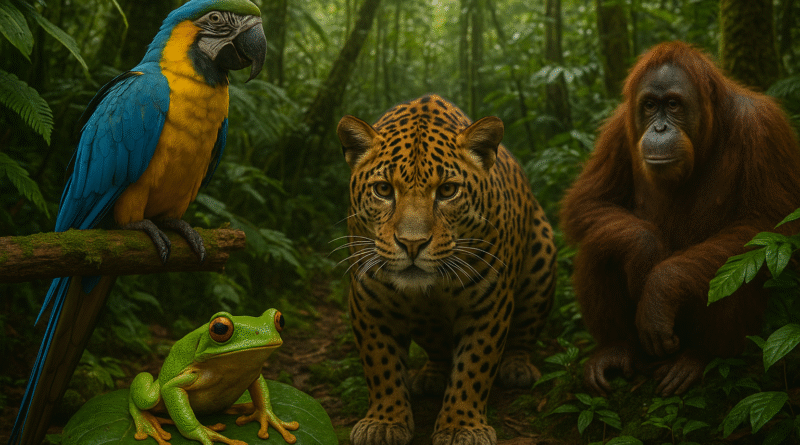
Rainforest Animals: Exploring the Amazing Wildlife of Earth’s Lush Jungles
Rainforest animals are among the most fascinating and diverse creatures on the planet. These dense forests—filled with towering trees, constant rainfall, and warm temperatures—provide the perfect environment for thousands of unique species to thrive. In this article, we dive deep into the mysterious world of rainforest animals, exploring their habitats, survival strategies, and importance to our ecosystem.
What Makes Rainforest Animals Unique?
Rainforest animals live in one of the most challenging yet resource-rich environments on Earth. Thick vegetation, limited sunlight on the forest floor, and abundant predators shape their behavior and appearance.
Key characteristics of rainforest animals:
-
Bright colors for communication and warning
-
Strong climbing abilities
-
Adapted to high humidity
-
Excellent camouflage
-
Unique calls and sounds for communication
These traits help them survive in environments where danger and competition are constant.
Types of Rainforest Animals
Rainforests are home to an astounding variety of species. Here are the major categories:
1. Mammals
Rainforest mammals are agile, intelligent, and adapted to life in thick forests.
Examples:
-
Jaguars
-
Sloths
-
Orangutans
-
Tapirs
-
Bats
Many of these mammals live on trees, using strong limbs and long tails to move around safely.
2. Birds
Colorful birds are one of the most beautiful parts of rainforest wildlife.
Examples:
-
Macaws
-
Toucans
-
Harpy eagles
-
Hummingbirds
They rely on fruits, insects, and nectar and often play a major role in seed dispersal.
3. Reptiles
Rainforests are ideal environments for reptiles due to the warm climate.
Examples:
-
Pythons
-
Iguanas
-
Chameleons
-
Anacondas
Some rainforest reptiles use camouflage to blend perfectly with trees and leaves.
4. Amphibians
Amphibians thrive in rainforests because of the constant moisture.
Examples:
-
Poison dart frogs
-
Tree frogs
-
Salamanders
The bright colors of some amphibians warn predators of their toxicity.
5. Insects
Over half of the species in rainforests are insects.
Examples:
-
Leafcutter ants
-
Butterflies
-
Beetles
-
Termites
Despite their small size, they play essential roles in pollination and decomposition.
How Rainforest Animals Survive
Life in the rainforest is not easy. Animals use amazing survival strategies, such as:
✔️ Camouflage
Many rainforest animals use patterns and colors to hide from predators.
✔️ Poison & Defense Mechanisms
Poison dart frogs use toxins as protection, while snakes rely on venom.
✔️ Climbing Adaptations
Monkeys, sloths, and certain reptiles use long limbs and gripping tails to navigate tree canopies.
✔️ Nocturnal Behavior
Some animals stay active at night to avoid predators and hunt efficiently.
Why Rainforest Animals Are Important
Rainforest animals support the health of the planet.
Seed Dispersal
Birds and mammals spread seeds, helping forests grow naturally.
Pollination
Insects support the growth of thousands of plant species.
Population Control
Predators like jaguars keep prey populations balanced.
Without rainforest animals, the entire ecosystem would collapse.
Threats to Rainforest Animals
Sadly, many species face extinction due to:
1. Deforestation
Large areas of rainforest are being destroyed for farming and development.
2. Illegal Hunting & Wildlife Trade
3. Climate Change
4. Pollution & Habitat Loss
These threats reduce food sources and destroy natural habitats.
How We Can Protect Rainforest Animals
Here’s how humans can help preserve these species:
- Support rainforest conservation groups
- Reduce paper and wood consumption
- Promote eco-friendly products
- Spread awareness about endangered species
Small steps can make a big difference for the future of rainforest life.
Interesting Facts About Rainforest Animals
-
Sloths move so slowly that algae grows on their fur.
-
Harpy eagles have claws as big as a bear’s.
-
Some frogs can change colors based on environment.
-
Jaguars are excellent swimmers.
Conclusion
Rainforest animals are vital to the health of our global ecosystem. Their unique adaptations, behaviors, and diversity show the beauty and complexity of nature. Protecting these incredible creatures is essential—not only for the rainforest but for the planet and future generations. By respecting nature and supporting conservation, we can ensure that rainforest animals continue to thrive for years to come.


